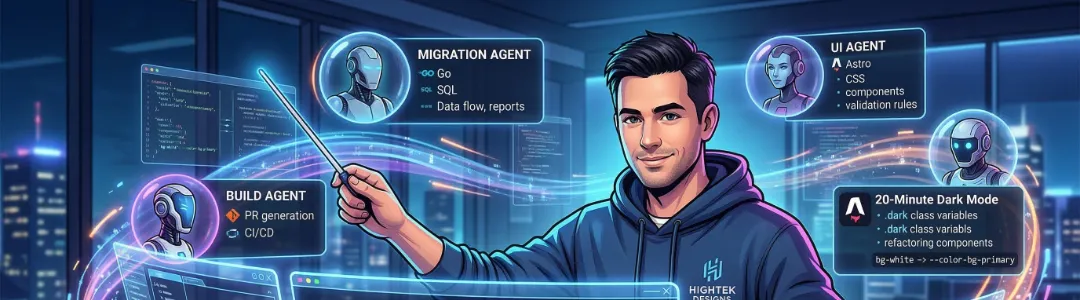
The Evolution of Coding in 2026
/ Blog, Tech, ProgrammingJoin our free newsletter on Patreon for updates & behind-the-scenes →Forget what you think you know about AI coding. I’m here now to talk about something that is fundamentally changing our world as developers: the evolution of coding in 2026. I know I didn’t post last week, and I apologize for that. This may seem like a bit of a crazier post, especially my thoughts on AI, but this year has been an absolute turning point for my career and favorite hobby. My thoughts on this may change next week, so let me just post this!
How it started
If you work in software, you know that the “GitHub Copilot” moment, where we started using AI to write faster code snippets, already feels like prehistoric tech.
We are now firmly entrenched in the era of Agentic Workflows. With the recent major updates to platforms like CLIs, agents, and Cowork, the conversation has fundamentally shifted. We are no longer debating whether an AI can write a specific function. We are moving toward a workflow where we are no longer just coding, but orchestrating intent.
As a Senior Developer split between major enterprise engineering and running my own agency, Hightek Designs, I’ve had to quickly adapt to this new reality. My value is no longer measured by how quickly I can type a complex SQL join or sorting algorithm. My value is now measured by how quickly I can synthesize an architectural decision into a hardened production feature.
Here is what that looks like in practice, moving from a complex architecture problem to a simple UI “win” I knocked out in under 20 minutes.
From Coder to Conductor
The best way to understand the difference between 2023 “Copilot coding” and 2026 “Agentic engineering” is the concept of expressing intent.
In the old workflow, you gave the AI a specific task (“Write a Go function to validate this JSON structure”). Today, you give an agent a broad intent and delegate the operational execution.
A modern Senior Engineer is no longer a code composer; they are a software conductor, directing a fleet of agents to implement the entire feature lifecycle, from data migration to UI integration and pull request generation.
The 20-Minute Sprint
But these tools aren’t just for complex, multi-week architectural projects. They can be deployed for small, “quality of life” tasks you’ve been dreading.
My joshuapack.com blog was still lacking a consistent dark mode. I’m a big fan of Astro for its modern islands architecture and SSG, and I decided to finally bridge the gap and build it.
Using the current stack, Astro combined with either modern CSS or Tailwind v4’s modern variable approach, this would have traditionally taken a few tedious hours of manual search-and-replace to implement :root variables and refactor every component.
Here is how I used an agent to knock this out in under 20 minutes (while having myself a beer watching some YouTube):
The Process:
- State the Context: I initiated an agent within my Astro project directory.
- Declare the Intent: “I want to implement a system-aware dark mode. I want you to define a set of semantic CSS variables based on our existing light-theme color palette. Then, I want you to generate the equivalent variables for the .dark class using the standard color transformations we use for Hightek sites.”
- Delegate Refactoring: “Once the CSS variables are defined, I want you to scan the entire
src/components/andsrc/layouts/directories. Any instance where a component has a hardcoded color or light-theme-specific CSS class (e.g.,bg-white,text-gray-900), I want you to refactor that element to use the semantic CSS variable instead.”
The agent took exactly nine minutes to analyze, generate the variables (defining things like --color-bg-primary, --color-text-body), and apply the changes across roughly 60 Astro components and three layout files.
My contribution? The remaining 11 minutes were spent spot-checking the result locally, asking for small edge case changes and pushing the commit. I used the tool to execute a large-scale structural change in minutes, focusing only on verifying the intent was properly executed.
Case Study: The Hightek Invoicing System
At Hightek Designs, I’ve spent the last few months rebuilding our subscription and invoicing system from the ground up. This was something I have been wanting to get done for 7 years. This isn isn’t a trivial CRUD app; it involves secure payment gateways, tax compliance, and multi-tenant data structures.
This is exactly where an agentic workflow shines. I utilized a team of specialized agents:
- The Migration Agent: I provided the intent: “Migrate our legacy invoice data to the new multi-tenant schema.” The agent analyzed the source data, generated the migration scripts (Go), executed them on a staging container, validated the data integrity, and provided a report. I didn’t write a single line of SQL or migration logic.
- The UI Agent: I described the intent of the billing address validation UI. The agent knew our design system, our validation rules, and the edge cases of international address formats. It generated the final, localized validation logic, cutting days of manual edge-case testing down to an hour.
Conclusion: Speed is the New Seniority
If you are a senior developer in 2026, and a simple task like implementing dark mode across a small-to-midsize site takes you more than an hour, you might have a skill issue.
The value we provide as engineers has always been problem-solving. But the definition of “solving” is changing. We are no longer the ones holding the shovel; we are the ones operating the heavy machinery.
When you embrace an agentic workflow, you aren’t just coding faster. You are freeing up critical mental bandwidth to focus on what actually matters: the architecture, the security, and the future of your systems.
The future of engineering isn’t writing better code; it’s directing the systems that write it.
~Joshua
Tags:Ai, Agents, Agentic Coding, Programming, Software, Tech, Productivity, 2026, Hightek-designsThe MacBook Neo: Apple's Most Interesting Compromise Yet
Related Posts
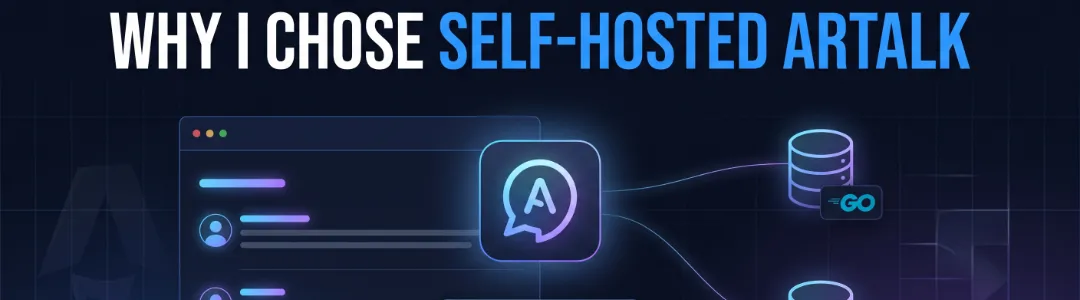
Adding Comments to an Astro Blog: Why I Chose Self-Hosted Artalk
Learn why I chose Artalk for my Astro blog. Discover how this self-hosted, lightweight, and privacy-focused comment system keeps my static site fast and secure.
Continue to read more…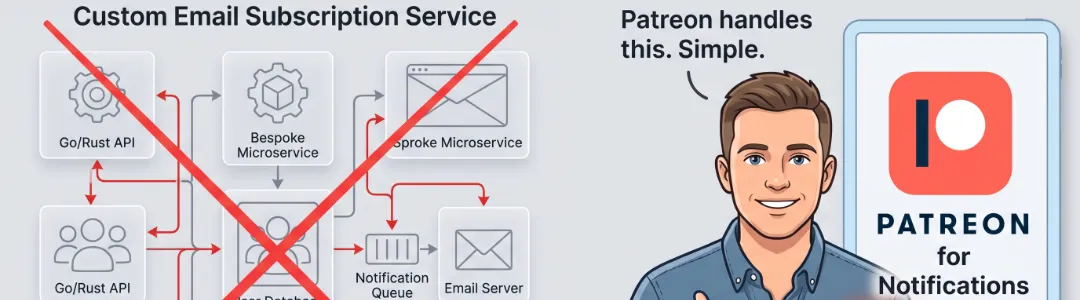
The Subscription System I Didn’t Build
I considered building a custom email subscription service but chose Patreon instead. Learn why I opted for simplicity over reinventing the wheel.
Continue to read more…
How I Host and Deploy My Astro Site for $0 on Cloudflare
Learn how to host and deploy your Astro static site for free using Cloudflare. Streamline your development workflow with this simple, reliable, and fast guide.
Continue to read more…
YouTube Moving the Goalposts: Why the 8,000 Watch Hour Cap Changes the Creator Grind
YouTube is doubling monetization requirements to 8,000 watch hours. Discover how this shift impacts creator strategy, workflows, and the future of small channels.
Continue to read more…
Comments
Join the discussion