
Speed over Pure Muscle: My First Week with Gemini 3.5 Flash
/ Blog, ProgrammingJoin our free newsletter on Patreon for updates & behind-the-scenes →On May 19th, 2026, Google announced its latest AI model: Gemini 3.5 Flash. What makes this model unique isn’t necessarily a massive jump in raw intelligence, but its sheer speed. That said, in my day-to-day use, I’ve found it to be just as capable as Gemini 3.1 Pro.
My primary use case for AI is software development. If I had unlimited time, I’d still write every line of code myself—there is something incredibly calming about the process. But with limited development hours these days, AI has shifted my role. I’ve become more of a manager: guiding the architecture, reviewing the AI-generated code, and approving it before it hits a feature branch or prod.
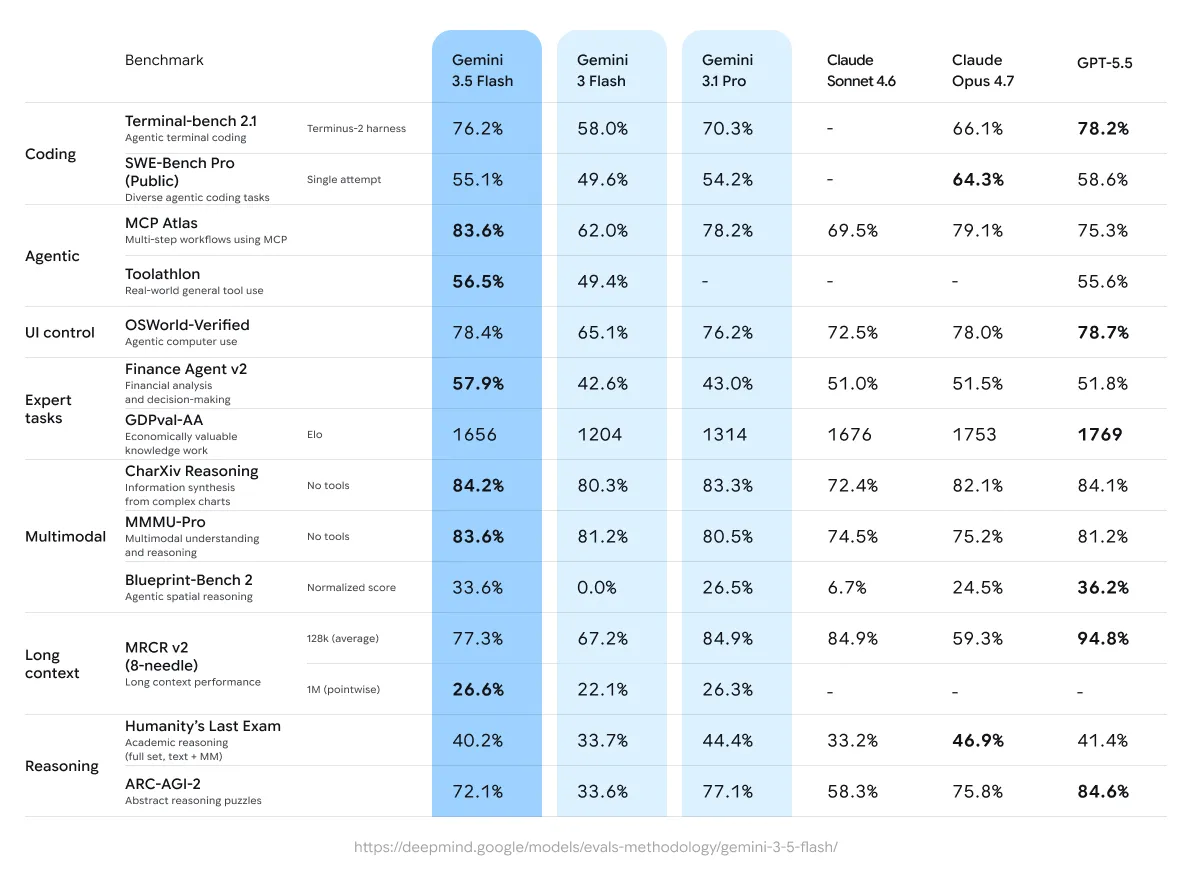
And for that workflow, this model shines. The benchmarks put Gemini 3.5 Flash on par with (or ahead of) many “pro” models on the market, but the real differentiator is the latency. This thing is blazingly fast compared to the competition.
Personal Agents vs. Coding Agents
Google is pushing hard on marketing “personal agents,” but right now, I just want highly efficient coding agents. I actually used AI heavily to build and launch the beta version of a new project recently (I’ll write a proper post dedicated to that soon). Building it taught me a massive amount about prompting and AI orchestration, and I only wish I had the time to document everything I learned.
Naturally, I wanted to see how the new Flash model handled my existing toolset. That brings me to Antigravity 2.0.
When the update dropped, I was initially excited—until I opened it. It felt like a stripped-down Codex clone that was missing key features, and I was incredibly disappointed. I still prefer an IDE-centric view because I like to actually roll up my sleeves, see the code contextually, and understand exactly what needs to be done.
Fortunately, I realized they split the ecosystem. The 2.0 app is the agentic-first “Codex clone,” while the traditional IDE view has been moved to a separate dedicated app. Along with that shift, they are also replacing the Gemini CLI with the new Antigravity CLI.
Balancing the Quota Burn
The initial rate limits on release were brutal. I was burning through my “5-hour limit” in about 25 minutes. Thankfully, they quickly responded by tripling the quota for both the 5-hour and weekly limits, and they’ve been resetting usage counters frequently as they push out updates.
They also introduced a new variant of the model: Gemini 3.5 Flash (Low).
The ecosystem now features High, Medium, and Low tiers. Word on the street is that the “Low” variant uses roughly 40% fewer tokens, which should hopefully translate into much longer sessions before hitting a wall. I’ve been running the Low variant since it dropped, and so far, it’s holding up well. I haven’t thrown any massive architectural tasks at it just yet, but I’ll write another update once I put it through its paces.
Until then, I’m just going to keep breaking things and learning as much as I can.
~ Joshua
Tags:Gemini-3.5-flash, Coding-agents, Antigravity-ai, Antigravity, Ai, Agentic Coding, Gemini, Software, Tech, Programming, Web Development, ProductivityHow to Migrate Zoho Mail to iCloud Custom Domain for Free
Related Posts
Adding Comments to an Astro Blog: Why I Chose Self-Hosted Artalk
Learn why I chose Artalk for my Astro blog. Discover how this self-hosted, lightweight, and privacy-focused comment system keeps my static site fast and secure.
Continue to read more…
The Subscription System I Didn’t Build
I considered building a custom email subscription service but chose Patreon instead. Learn why I opted for simplicity over reinventing the wheel.
Continue to read more…
How I Host and Deploy My Astro Site for $0 on Cloudflare
Learn how to host and deploy your Astro static site for free using Cloudflare. Streamline your development workflow with this simple, reliable, and fast guide.
Continue to read more…
YouTube Moving the Goalposts: Why the 8,000 Watch Hour Cap Changes the Creator Grind
YouTube is doubling monetization requirements to 8,000 watch hours. Discover how this shift impacts creator strategy, workflows, and the future of small channels.
Continue to read more…
Comments
Join the discussion